

Modern highways are prone to issues like congestion, frequent accidents, and unpredictable weather. To find solutions for these problems, Variable Speed Limit Signs have become one of the most important tools in improving road safety and optimizing traffic flow.
What is Variable Speed Limit Sign (VSLS)?
Variable Speed Limit Signs are displays of dynamic traffic management that adjust to roadway conditions in real-time. Unlike traditional fixed-speed limits, which remain constant, the VSLS are able to change depending on driving conditions, including the volume of traffic, weather conditions, and the state of the road surface. This enables safer, smoother-flowing traffic under changing conditions.
Traditional fixed-speed limits cannot consider the ever-changing traffic and weather conditions, which are the common causes of accidents due to sudden changes in the flow of traffic or at undue speeds during unfavorable conditions. In contrast, VSLS respond to these variables, reducing risk and improving overall road safety. Let us look in detail at some of the key objectives and Benefits of VSLS.

Key Objectives and Benefits of VSLS
Reduce Traffic Accidents
- Objective: Adapt the speed limits to match the condition of the road.
- Benefit: It prevents accidents caused by speeding or sudden changes in traffic, hence promoting safety on the roads.
Optimize Traffic Flow
- Objective: Ensure smooth traffic movement.
- Benefit: Reduces congestion and improves traffic efficiency, leading to quicker travel times.
Enhance Driver Awareness
- Objective: Provide real-time speed information.
- Benefit: Encourages responsible driving practices and increases driver alertness.
Environmental Sustainability
- Benefit: Optimized traffic flow leads to fewer vehicle stops and starts, decreasing overall emissions and contributing to environmental conservation.
To achieve these objectives, VSLS are divided into several types, each serving different purposes and applications.
Types and Application Scenarios of Variable Speed Limit Signs
A. Congestion-Responsive VSLS
- Purpose: To cope with congestion, incidents, or peak traffic flow within a very short time, including rush hours.
- Functionality: Gradually reduce the speed limits while approaching the congestion point to avoid sudden deceleration and prevent stop-and-go traffic flow.
- Application Scenario: Highways and freeways experiencing peak hour traffic.
B. Weather-Responsive VSLS
- Purpose: Increase safety in rain, snow, ice, or fog conditions.
- Functionality: The speed limits would automatically be lowered when sensors detect poor weather conditions.
- Application Scenario: Areas where the weather is frequently changing.
C. School Zone VSLS
- Purpose: Protection of children and flow control around school areas.
- Functionality: Change the speed limits according to school schedules, having lower speeds during peak school hours.
- Application Scenario: School zones during designated start and end times.
D. Construction Zone VSLS
- Purpose: Ensure safety in areas with road construction.
- Functionality: Dynamically change the speed limits according to the construction activity.
- Application Scenario: Construction zones during active work periods.
E. Other Specialized VSLS
- Purpose: Address unique traffic management needs, such as special events or emergency responses.
- Functionality: Provide tailored speed adjustments to suit specific situations.
- Application Scenario: Event zones or emergency response areas.
The Technical Principles Behind VSLS
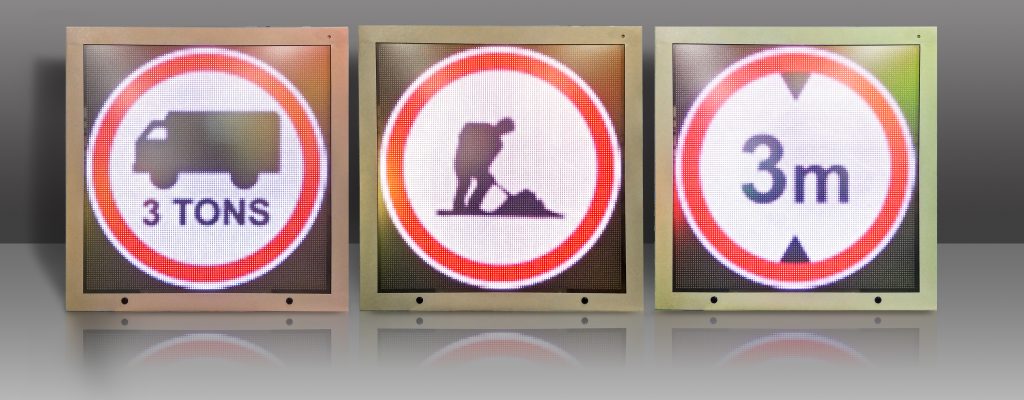
VSLS rely on a combination of advanced technologies to function effectively. Integrating state-of-the-art LED displays ensures superior performance and visibility.
A. Sensors and Data Collection
- Traffic Flow and Speed: Sensors monitor vehicle numbers and speed.
- Weather Conditions: Environmental sensors detect any change in weather, such as rain intensity or fog density.
- Road Surface Quality: Sensors monitor road conditions, warning of potential hazardous conditions such as ice or potholes.
B. Data Processing and Algorithms
- Real-Time Analysis: Advanced algorithms process the collected data to determine optimal speed limits.
- Adaptive Responses: The system keeps updating the speed limits with the help of the latest information.
C. Display Technology and Communication
- High-Visibility Displays: Ultra-bright, high-intensity LED screens ensure visibility in all weather conditions, making them ideal for VSLS.
- Wireless Communication: Allows for remote control and real-time updates to change the speed limits immediately.
D. Remote Control and Programming
- Instant Adjustments: Traffic management operators can change speed limits remotely.
- Scheduled Programming: VSLS can be programmed to adjust speed limits automatically based on predefined schedules.
- User Access Management: Systems support multiple users with varying levels of access to ensure only authorized personnel can modify speed limits.

Future Development Trends
Even as the foregoing technical principles constitute the bedrock for current VSLS, continuous improvement in each of those areas promises to enrich their potential even more.
A. Technological Innovations
- Advanced Sensors: Continued improvements will enhance accuracy and responsiveness.
- Enhanced Algorithms: More sophisticated data processing will enable precise speed limit adjustments.
B. Integration with Intelligent Transportation Systems
- Smart Traffic Networks: Increased integration with other smart traffic tools, such as intelligent traffic signals and vehicle-to-everything (V2X) communication systems.
- Autonomous Vehicles: Real-time speed adjustments directly to vehicle systems will further enhance traffic safety and efficiency.
C. Global Expansion and Adaptation
- Worldwide Adoption: Spread to every corner of the world to meet various traffic needs.
- Customized Solutions: Effectiveness and acceptability will be enhanced in local applications with customized solutions.
How to Customize Variable Speed Limit Signs?
Need variable speed limit signs with your requirements? Welcome consider Comsight for your service. We are specialists in designing and manufacturing high-quality custom LED displays and Variable Speed Limit Signs according to customers’ needs. Whether you need a customized solution for a single project or a bulk order for large-scale implementation, Comsight offers flexible options to suit every traffic management requirement. Our VSLS is fabricated with advanced technology that guarantees durability, visibility, and smooth integration with the already existing infrastructure. Furthermore, comprehensive support and services are also provided, right from consultation to design, installation, and maintenance. Get in touch with us to get started.
Sources
- Federal Highway Administration. Proven Safety Countermeasures: Variable Speed Limits. U.S. Department of Transportation. Highways.dot.gov.
FAQ
1. What are Variable Speed Limit Signs (VSLS)?
Answer: VSLS are traffic dynamic signs that adjust the speed limits in real time, given road conditions at any time, such as amount of traffic flow, weather conditions, and road quality, thus ensuring more safety and efficiency in terms of flow.
2. How do VSLS ensure drivers are promptly informed of speed limit changes?
Answer: VSLS use high-brightness LED displays for clear visibility and connect to traffic centers wirelessly to enable fast updates. They can also be integrated with vehicle navigation systems and mobile apps to directly notify the driver.
3. Does implementing VSLS increase traffic management costs?
Answer: While there are initial installation and maintenance costs, VSLS reduce accidents and congestion, thereby saving money in the long run through reduced accident-related costs and better fuel efficiency.
4. How are VSLS applied in different countries and regions?
Answer: VSLS are used worldwide, including in the USA, Europe, China, and Japan. Each region customizes VSLS to address specific traffic needs, such as managing peak hours, enhancing safety in school zones, and adapting to local weather conditions.

